
Last updated September 24, 2026
Free in-home measure and quote - PGT, CGI and CWS impact lines compared on your actual openings, style by style


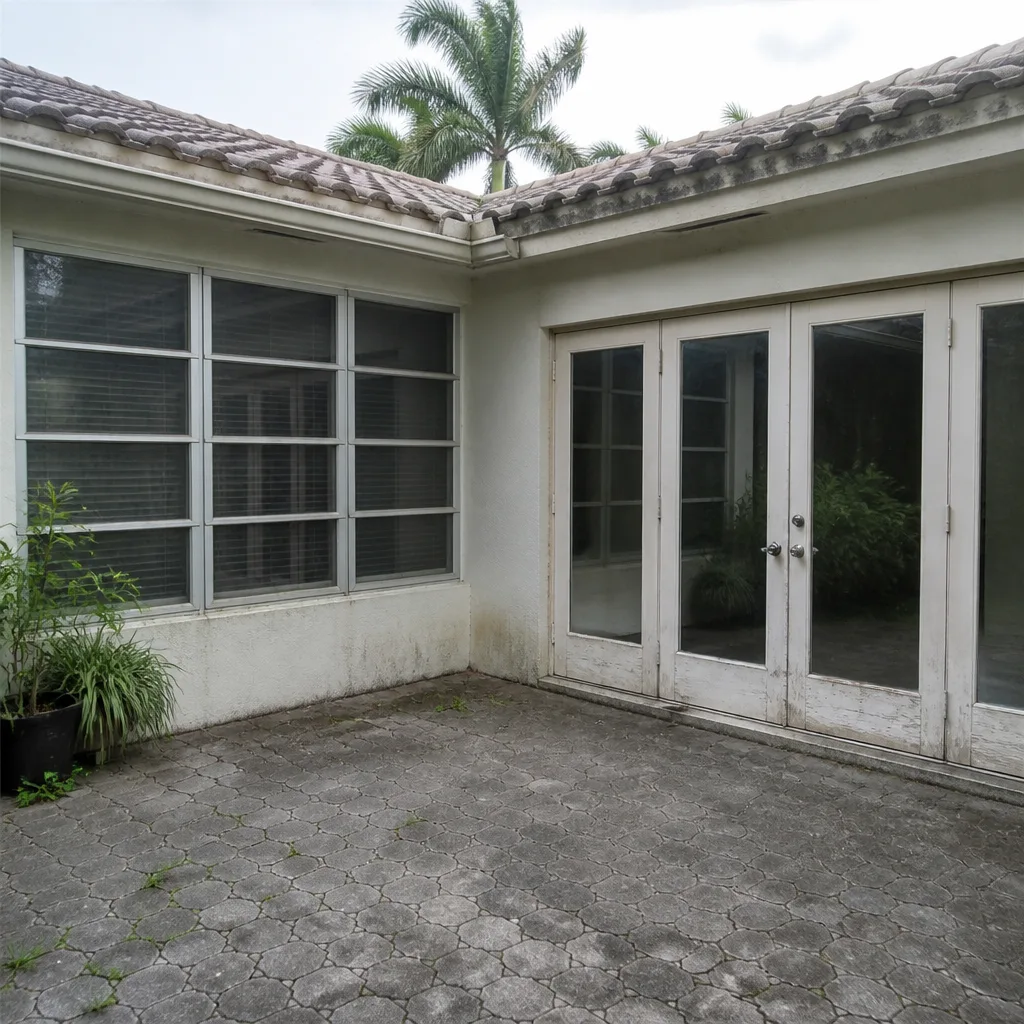 Before
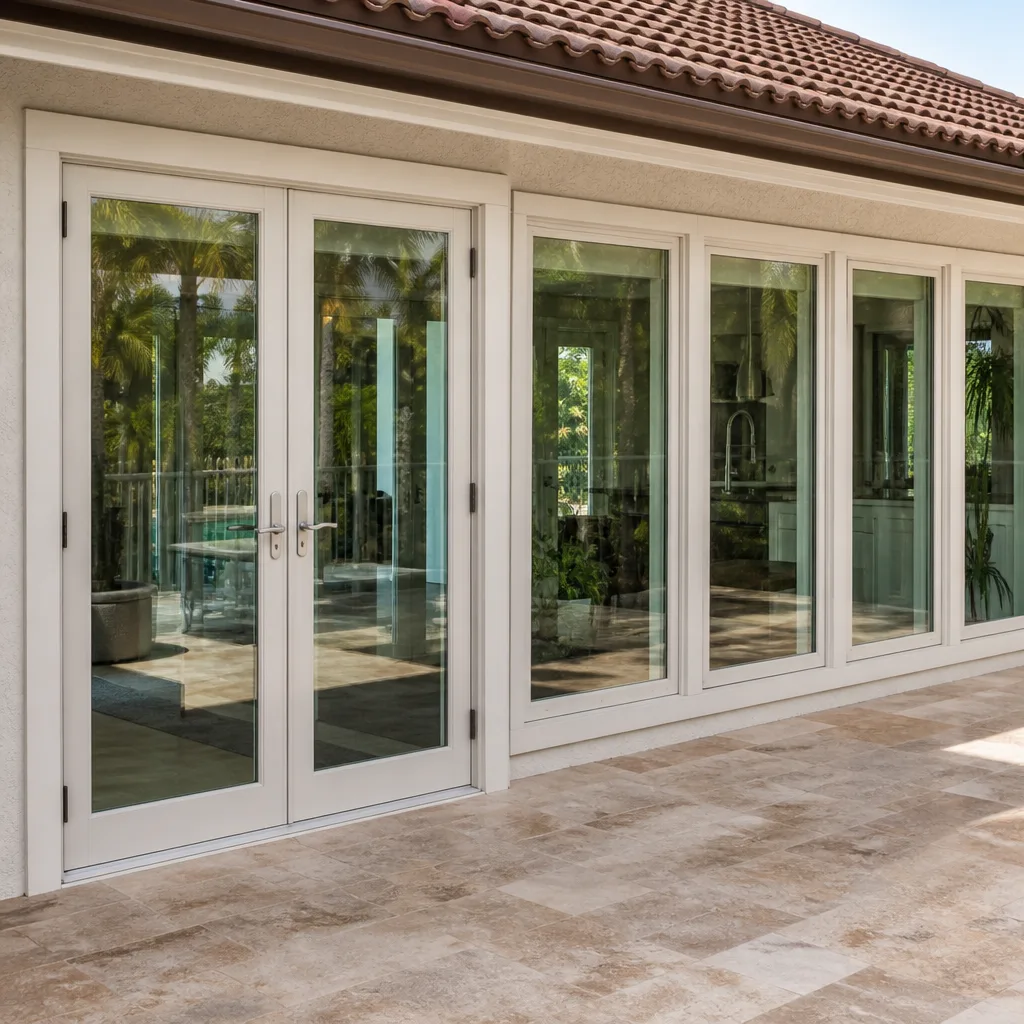 After
After Before
 After
After Before
 After
AfterWindows & Doors Warning Signs: A Jupiter Homeowner’s Reference Guide
A window that sticks a little in Jupiter’s summer humidity is not a humidity problem. In our experience across more than 18,000 openings since 2012, that resistance often signals a frame that has racked because the rough-opening header has deflected, a structural issue that costs $3,000-$8,000 to correct once the siding comes off. Most warning-sign guides describe obvious failures, visible rot, broken glass, drafts, but the conditions that cost Jupiter homeowners the most money read as minor inconveniences for twelve to thirty-six months before the wall behind the frame is destroyed. This reference guide focuses on the subtle, early indicators, explains the failure mechanism behind each one, and gives you a decision matrix for what to monitor, what to evaluate, and what to stop using today. For a broader look at protecting your home, see The Complete Guide to Windows & Doors in Jupiter.
Quick Answer
The warning signs that matter most in Jupiter are not the obvious ones. A fogged insulated glass unit, a door that latches harder than it used to, or white powder on an aluminum frame often precede structural damage by two to three years. Monitor cosmetic issues like minor hardware wear; call a contractor for evaluation when you see frame movement, seal failure, or threshold deflection; stop using the opening immediately if you find hinge-side frame separation, multipoint lock misalignment, or visible water staining on interior drywall. If you’re unsure whether to tackle issues yourself or bring in a pro, read our DIY vs Professional Windows & Doors: The Jupiter Homeowner’s Decision Guide.
Table of Contents
- Cosmetic vs. Structural Warning Signs: A Decision Matrix
- Salt-Air Failure Signatures Unique to Coastal Jupiter
- How to Diagnose a Fogged Insulated Glass Unit Without Paying for an Inspection
- Door-Specific Warning Signs Windows Guides Routinely Omit
- Documentation Protocol: What to Record Before You Call a Contractor
- How Jupiter’s Climate and Code Environment Accelerate Specific Failures
- Common Mistakes to Avoid
- When to Call a Professional
- Frequently Asked Questions
 Before
 After
AfterCosmetic vs. Structural Warning Signs: A Decision Matrix
Not every imperfection demands immediate action. The skill is in reading which symptoms indicate surface wear and which predict cascading failure. We’ve developed this matrix from eighteen years of measured surveys in Jupiter, Tequesta, Palm Beach Gardens, and the barrier island communities.
Monitor: Cosmetic Issues That Do Not Threaten Structure
- Minor hardware tarnishing on exterior screws or escutcheons, without pitting. Surface oxidation on stainless steel in Jupiter’s salt air is expected; it becomes relevant only when it progresses to pitting that reduces fastener cross-section.
- Single-pane fogging that clears by midday. Exterior condensation on the outside surface of impact-rated glass, common in Jupiter’s morning humidity, is a function of dew point and glass temperature, not seal failure.
- Paint chalking on exterior frames. UV degradation of topcoat on aluminum or fiberglass is maintenance, not failure. Re-coat on the manufacturer’s schedule.
- Weatherstrip compression set. After five to seven years, bulb seals take a permanent compression. Replacement weatherstrip is a $40-$120 part; the frame and sash are unaffected.
Evaluate: Call a Contractor Within 30 Days
- Operable sash that requires increasing force. The humidity excuse wears thin after two Jupiter summers. Binding indicates frame racking, sill swelling, or hinge wear that is transferring load to points not designed for it.
- Daylight visible between sash and frame in the closed position. Even 1/16 inch of visible gap means the weatherstrip is no longer in compression and the drainage path may be compromised.
- Interior condensation between panes of an insulated glass unit. Seal failure is confirmed; the question is whether the spacer bar has corroded, which determines repair versus replacement.
- Threshold flex under body weight. Step on the threshold with your full weight. Deflection greater than 1/8 inch indicates substrate decay or improper support blocking.
Stop Using Today: Structural Failures With Injury or Damage Risk
- Hinge-side frame separation from the rough opening. Gaps at the hinge jamb mean the door is hanging from screws in compromised substrate. The next hard close can tear the frame free.
- Multipoint lock misalignment. If the deadbolt or hook bolts no longer engage their keepers smoothly, the frame has moved. Forcing the mechanism stresses the lock case and can jam the door in a locked or unlocked position.
- Visible water staining on interior drywall adjacent to any opening. The water has found a path through the drainage plane. Every rain event extends the damage into the wall cavity.
- Glass edge delamination visible at corner sight lines. In impact-rated units, this compromises the laminated interlayer. The unit may still pass a visual inspection but will not perform under debris impact.
The Haven Standard requires that our technicians document which category each observed condition falls into, with photographs and frame readings, so the homeowner has evidence rather than opinion. That documentation becomes the basis for the written scope and the written price.
Salt-Air Failure Signatures Unique to Coastal Jupiter
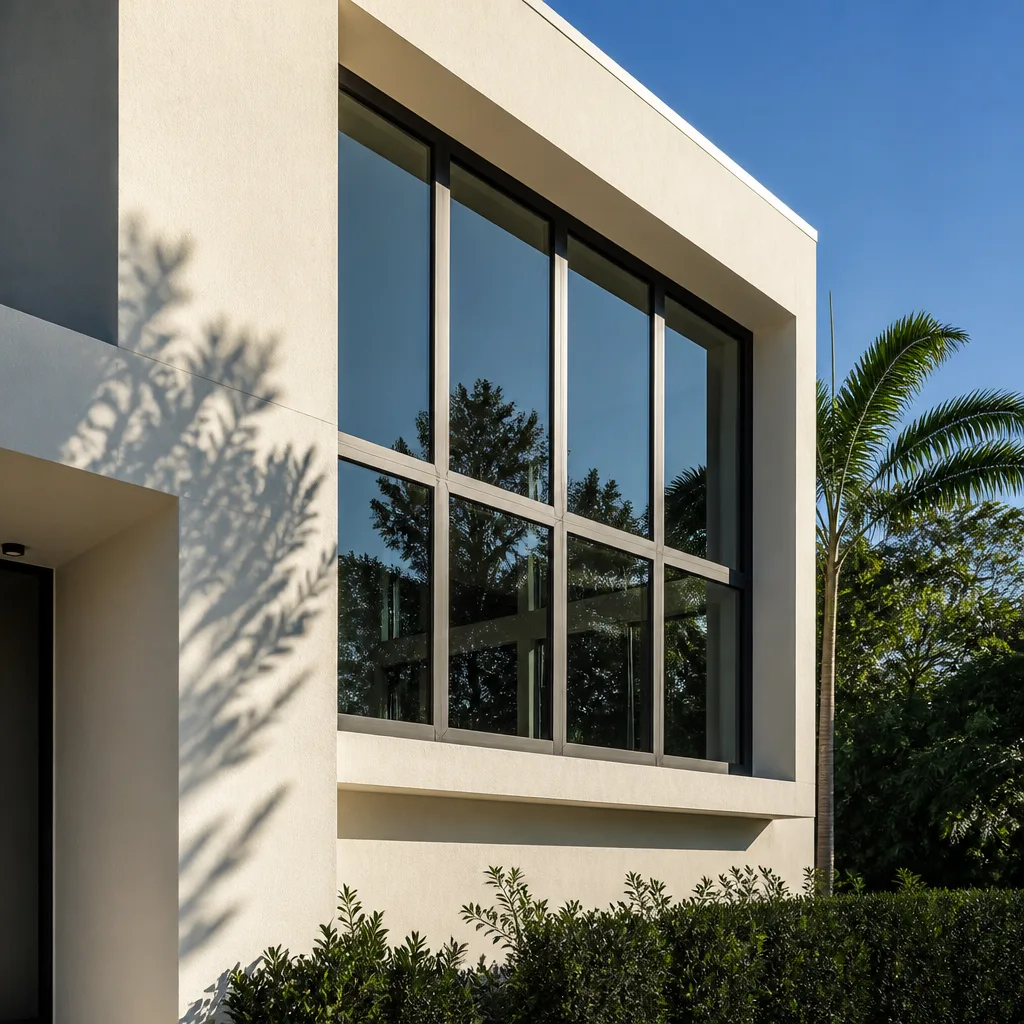
Jupiter’s location on the Atlantic, with prevailing easterlies carrying salt spray inland to I-95 and beyond, produces failure modes rare thirty miles west in the interior. These three signatures are specific enough that we can often predict failure timelines from a photograph.
White Efflorescence on Aluminum Frames
The white powdery deposit on anodized or painted aluminum is not paint failure. It is aluminum oxide and hydroxide formed when chloride ions from salt air penetrate microscopic breaches in the surface coating and initiate galvanic corrosion. The critical distinction: efflorescence that wipes away with a damp cloth is surface deposit from evaporated salt spray and is benign. Efflorescence that is chalky, adherent, and reveals pitting when wiped indicates active corrosion of the substrate.
In Jupiter Inlet Colony and along Ocean Boulevard, we see this pattern accelerate on east-facing elevations, where overnight salt deposition combines with morning dew to maintain an electrolyte film. Pitting depth of 0.005 inch on a 0.060-inch wall section reduces structural capacity by 8% and provides nucleation points for crack propagation. Once pitting is visible, frame replacement is typically required within eighteen to thirty-six months.
Glass Edge Delamination at Corner Sight Lines
Impact-rated windows in Jupiter rely on laminated glass: two lites bonded with a polyvinyl butyral (PVB) or ionoplast interlayer. At the edges, the interlayer is exposed to UV and moisture ingress. Salt air accelerates hydrolysis of the interlayer, causing it to separate from the glass in a pattern visible when you sight along the edge at a shallow angle.
Early-stage delamination appears as a hairline silver line at the glass edge, often in the lower corners where condensation collects. Advanced stage shows visible bubbling or brown discoloration. The failure mechanism: moisture ingress through the edge seal degrades the interlayer, reducing the unit’s ability to retain glass fragments under impact. Florida Building Code requires impact-rated openings in Jupiter’s wind-borne debris region; a delaminated unit may not meet code even if the glass is intact.
PGT and CGI impact-rated lines specify edge treatments that extend delamination resistance; we verify edge condition on every measured survey and photograph it for the evidence record.
Hardware Pitting Patterns That Predict Mechanism Failure
Not all pitting is equal. Pitting concentrated on the horizontal surfaces of handles and locks indicates airborne salt settling, which is gradual and predictable. Pitting on vertical surfaces, particularly at the base of lock cylinders and on the underside of hinge pins, indicates standing moisture, poor drainage, or capillary wicking from the sill. This pattern predicts mechanism failure within eighteen months because corrosion products expand in volume, jamming cylinders and increasing operating torque beyond the design limit.
We document hardware condition with magnification photographs and operating-force measurements. A multipoint lock that requires more than 8 lbf to engage is outside manufacturer specification and indicates either hardware degradation or frame movement.
How to Diagnose a Fogged Insulated Glass Unit Without Paying for an Inspection
A fogged insulated glass unit (IGU) is not automatically a full replacement. The failure location determines whether resealing is possible and what the repair scope should cost. Here is the protocol we use on initial evaluation in Jupiter homes.
Step 1: Determine Whether the Fog Is Between Panes
Run your finger across the interior surface, then the exterior surface. If neither surface is wet or obstructed, the fog is in the air space between the lites. Seal failure is confirmed.
Step 2: Assess the Fog Pattern
| Fog Pattern | Failure Location | Repair Scope | Typical Jupiter Price Range |
|---|---|---|---|
| Central fogging, clear edges; fog clears in afternoon sun | Seal breach, likely at one edge; desiccant saturated | Unit replacement recommended; resealing has 40-60% failure rate within 2 years | $280-$520 per unit for standard sizes |
| Fogging concentrated at bottom edge, with visible moisture line | Seal failure at sill; possible spacer bar corrosion | Spacer bar inspection required; if corroded, full unit replacement | $320-$580 per unit; geometric or custom sizes higher |
| Fogging with rainbow iridescence or crystalline deposit | Spacer bar breach; desiccant released into air space | Full unit replacement only; glass lites may be salvageable for custom cutting | $340-$620 per unit |
| Perimeter fogging only, forming a band 1/2 inch from edge | Primary seal failure; secondary seal intact | Resealing possible if caught early; evaluate spacer condition | $180-$340 for reseal; $280-$520 if replacement required |
Step 3: Inspect the Spacer Bar Visually
Sight along the edge of the unit at a shallow angle. The spacer bar, visible as a dark or metallic line between the glass lites, should be straight and uniform in color. A wavy or discolored spacer bar, particularly a white or gray aluminum spacer that has turned black at the corners, indicates corrosion. Corroded spacer bars cannot maintain seal integrity; resealing is not recommended.
Step 4: Check for Frame Contribution
In Jupiter’s high-humidity environment, frame drainage failure can accelerate IGU seal degradation. Look for standing water in the sill track, blocked weep holes, or sill cap separation. If the frame is contributing to moisture load, unit replacement without frame correction will produce repeat failure.
We provide a free second opinion on any written estimate for IGU replacement. Bring us a competitor’s scope and we will review the failure diagnosis at no charge, with documentation of what we find.
Door-Specific Warning Signs Windows Guides Routinely Omit

Doors experience different load patterns than windows: concentrated foot traffic, dynamic impact from closing, and operational cycles that can exceed window sash movement by an order of magnitude. These four signs are door-specific and often misdiagnosed.
Threshold Deflection Under Foot Load
Step onto the threshold with your full weight, then shift your weight to produce a rocking motion. Deflection greater than 1/8 inch, or a spongy sensation, indicates substrate decay, inadequate support blocking, or sill plate compression. In Jupiter’s climate, threshold deflection often traces to termite damage in the sill plate or moisture-induced delamination of composite threshold material.
The failure mechanism: the threshold is the load path for door operation forces. When it deflects, the door frame racks, misaligning the lock and hinge hardware. We measure threshold deflection with a dial indicator during our survey and record the reading on the measured survey document the customer keeps.
Hinge-Side Frame Separation
Close the door and examine the gap between the hinge jamb and the adjacent wall trim. A consistent gap of 1/16 inch or less is normal shim space. A gap that widens toward the top, or that shows exposed rough-opening framing, indicates the hinge screws have pulled from the substrate or the jamb has split.
This is a stop-using-today condition. The door’s weight is hanging from progressively fewer fasteners in compromised material. The next hard wind load or forced closure can tear the frame from the opening. We have documented this failure in Jupiter homes from the 1980s and 1990s construction boom, where pine framing and standard-length hinge screws were common.
Multipoint Lock Misalignment as Frame Movement Indicator
Multipoint locks, standard on most impact-rated and fiberglass entry doors, engage bolts or hooks at multiple points along the door edge. When the frame moves, even slightly, the keepers no longer align with the lock points. The homeowner’s experience: the handle operates but the deadbolt requires shoulder pressure, or the top hook bolt rattles in its keeper.
Forcing alignment by adjusting the keepers without correcting frame movement masks the underlying condition. The correct diagnostic: close the door on a dollar bill at each lock point. Resistance should be uniform. Variation of more than 50% indicates frame racking or threshold deflection. We check lock-point compression with a feeler gauge and record the variance.
Threshold-to-Sill Cap Separation
The transition between the door threshold and the exterior sill cap is a critical drainage point. Separation here, visible as a gap or as caulk failure, allows water to bypass the drainage plane and enter the subfloor. In Jupiter’s driving rain events, this path can deliver significant water volume before interior signs appear.
Check this junction after heavy rain. Standing water, debris accumulation, or visible wetting of the interior edge indicates drainage compromise. The repair may be as simple as sealant replacement or as extensive as threshold and sill cap replacement with substrate repair.
Documentation Protocol: What to Record Before You Call a Contractor
The quality of the estimate you receive depends on the quality of the information you provide. Vague descriptions produce vague scopes, which produce change orders. This protocol gives you the documentation to demand specificity.
Photographs: What to Capture
- Overall opening from 10 feet. Frame the entire opening with adjacent wall visible. This establishes context: siding type, trim condition, and elevation orientation.
- Close-up of the symptom area. Fill the frame with the defect. Use a coin or ruler for scale.
- Edge sight line along the glass. For suspected delamination or seal failure, sight parallel to the glass edge to make the condition visible.
- Interior and exterior drainage paths. Weep holes, sill track, threshold exterior edge. Show whether drainage is clear or obstructed.
- Hardware operating condition. Lock mechanism, hinges, handles. Show pitting, corrosion, or misalignment.
- Adjacent interior wall. Any staining, bubbling, or texture change on drywall within 24 inches of the opening.
Measurements: What to Record
- Opening dimensions: width at sill, width at head, height at each jamb. Variation greater than 1/4 inch indicates frame racking or rough-opening distortion.
- Diagonal measurements: sill-left to head-right, and sill-right to head-left. Difference greater than 3/8 inch confirms racking.
- Threshold deflection: place a straightedge across the threshold and measure gap to straightedge at center. Record in 1/16-inch increments.
- Operating force: subjective scale of 1-5, where 1 is single-finger operation and 5 requires body weight. Record for each direction of operation.
History: What to Note
- Date symptom first observed
- Any correlation with weather events (hurricane, tropical storm, prolonged rain)
- Previous repairs or replacements on this opening, with dates if known
- Manufacturer and product line, if visible on the frame label or etched in the glass corner
Present this documentation to any contractor and request that their scope address each documented condition specifically. At Sightline Windows & Doors Jupiter home, the measured survey we provide incorporates this documentation as standard. The written quote references each photograph and measurement by number; the final invoice cannot differ from that document.
How Jupiter’s Climate and Code Environment Accelerate Specific Failures

Jupiter’s conditions are not generic Florida. The specific combination of salt air, high humidity, intense UV, and wind-borne debris requirements produces accelerated failure modes that inland guides miss.
Humidity and the Drainage Plane
Jupiter’s average relative humidity exceeds 75% for eight months of the year. In window and door systems, this means the pressure differential that drives drainage is reduced, the desiccant in IGUs saturates faster, and organic growth in drainage channels is continuous. Weep holes that would remain clear in drier climates clog with algae and salt residue in Jupiter within two to three years without maintenance.
The code response: Florida Building Code requires pressure-balanced drainage in impact-rated systems, but the code does not mandate maintenance access. We specify products from PGT, CGI, and ViewLux with removable sill caps or accessible weep covers for Jupiter installations, because maintenance determines lifespan more than product specification.
UV Exposure and East-West Elevation Differential
Jupiter’s latitude produces high annual UV dose, but the critical factor is elevation orientation. West-facing openings receive afternoon UV at higher ambient temperature, accelerating sealant degradation and frame coating failure. East-facing openings receive morning UV on surfaces wet with dew and salt deposit, accelerating corrosion. We document elevation orientation on every measured survey and specify coating systems and sealant types accordingly.
Wind-Borne Debris Region and Impact-Rated Requirements
Jupiter is within the High-Velocity Hurricane Zone wind-borne debris region. Replacement windows and doors must be impact-rated or protected with approved shutters. This requirement affects failure diagnosis: a cracked impact-rated unit may still be structurally intact due to the interlayer, but the crack provides a moisture path that accelerates interlayer degradation. The repair scope must address both the visible damage and the latent moisture exposure.
We verify impact rating by the product approval number etched in the glass corner or on the frame label, and we confirm that any replacement meets current Florida Building Code requirements for the specific Jupiter address. Code cycles have changed; a product approved in 2010 may not meet 2023 standards.
Soil and Foundation Movement in Coastal Soils
Jupiter’s coastal soils, particularly in Abacoa and the waterfront communities, include organic layers and sand that are susceptible to settlement and seasonal moisture variation. Differential settlement produces frame racking that reads as operational difficulty. Before specifying window or door replacement, we evaluate whether the opening distortion is product failure or structural movement. Replacing a window in a racked frame produces the same symptoms in the new unit within months.
Our measured survey includes rough-opening squareness and wall plumb readings. If structural movement is indicated, we note it in the written scope and recommend appropriate remediation before product installation.
Common Mistakes to Avoid
- Attributing operational difficulty to humidity without checking frame squareness. Jupiter’s humidity is constant; if the window operated smoothly last year and binds this year, the frame has moved. Humidity does not change year-to-year in a way that explains progressive binding.
- Applying silicone caulk over failed sealant without removing the old material. New caulk will not bond to oxidized or contaminated substrate. The repair fails within one season, trapping water behind the new bead.
- Replacing only the visible damaged unit in a multi-opening wall without evaluating adjacent units. Water intrusion at one opening often indicates systemic drainage plane failure. The adjacent units may show no interior symptoms but have compromised seals.
- Accepting a verbal estimate for impact-rated replacement. Florida Building Code requires product approval documentation. A verbal price cannot reference the specific approval number, and the installed product may fail inspection.
- Ignoring manufacturer-specific maintenance requirements. PGT, CGI, and Therma-Tru each publish maintenance schedules for coastal environments. Failure to follow them voids warranty coverage and accelerates failure.
- Assuming fogging between panes always requires full frame replacement. In many cases, sash replacement or IGU replacement is sufficient. Frame replacement without frame failure is unnecessary cost.
- Failing to document pre-existing condition before storm season. Insurance claims for storm damage require evidence of pre-storm condition. Photographs and measurements taken in calm weather establish baseline for any later claim.
When to Call a Professional
Call for evaluation when you observe frame movement, seal failure with moisture between panes, threshold deflection, or any condition in the “evaluate” or “stop using” categories above. Not sure who to trust with the work? Our How to Hire a Windows & Doors Contractor in Jupiter: A Step-by-Step Guide walks you through the selection process. Do not wait for interior water damage to appear; by then, wall cavity damage is extensive.
Window Installation in Jupiter and Door Installation in Jupiter require specific product knowledge, code compliance verification, and installation technique. The cost of professional evaluation is modest compared to the cost of misdiagnosis.
Sightline Windows & Doors Jupiter offers free estimates in Jupiter. Our measured survey produces a written scope and written price before any work is proposed. Call (772) 362-5402 to schedule. Every estimate includes the documented photo record and is governed by the Haven Standard: Have it in writing, Arrive on schedule, Verified crews, Evidence on every job, No surprises.
Frequently Asked Questions
Standard-size vinyl or aluminum window replacement in Jupiter typically ranges from $680 to $1,400 per opening for non-impact-rated units, and $1,200 to $2,400 for impact-rated units, depending on size, glazing specification, and installation complexity. Geometric, custom, or oversized openings increase from that baseline. Call (772) 362-5402 for an exact quote on your specific openings, estimates are free, and we provide a written price before any work starts.
No. Haven Clause 1 requires that the measured survey and the written quote are the same document. If we encounter concealed damage during installation, we document it, stop work, and present a revised scope with a revised written price before proceeding. We do not proceed on verbal authorization or open-ended change orders.
Yes. We pull all required permits and schedule inspections. Florida Building Code compliance is verified by product approval number before ordering, and the installation is inspected to confirm code compliance. The permit documentation is included in the job record the customer receives.
Standard single-opening replacement requires four to six hours of installation time. Full-home replacement of twelve to twenty openings typically spans three to five working days, depending on product lead time and inspection scheduling. We specify arrival times, not windows; the crew arrives on schedule or we notify you of the revised time.
Inspect for glass edge delamination, frame distortion, and hardware damage. If the laminated glass is cracked but intact, the unit may still provide debris resistance but the crack compromises moisture protection. We offer post-storm evaluation with documentation for insurance purposes. The inspection includes frame readings, glass edge photographs, and a written condition report.
If any aspect of our installation is not done right, we make it right, for 365 days from completion. This is written into the Haven Standard on every job, not offered as a courtesy. The promise covers installation workmanship, product performance, and code compliance. Claims are documented with the same photo evidence standard as the original installation.
Yes. Bring us any written estimate and we will review it at no charge. We evaluate the product specification, scope completeness, and price structure against current market rates in Jupiter. The review includes our own measured survey if you choose to proceed with us, but there is no obligation.
The Bottom Line
The warning signs that cost Jupiter homeowners the most are the ones that seem minor: a door that latches harder, a window that sticks in July, white powder on the frame that wipes away. This guide gives you the decision matrix to distinguish monitor from evaluate from stop-using, the specific diagnostic steps for fogged glass and door hardware, and the documentation protocol to get accurate scopes instead of replacement upsells. The coastal environment here accelerates failure modes that inland guides do not address. Document what you observe, measure what you can, and demand that any contractor’s written scope addresses your specific conditions with specific products and specific prices.
Window Replacement in Jupiter is not a commodity purchase; it is a technical specification executed under code requirements that vary by address and elevation. The Haven Standard exists because the details matter: the written price, the verified crew, the documented evidence, the no-surprise completion.
Call (772) 362-5402 to schedule your free estimate. We’ll bring the measured survey, the camera, and the written scope. You keep all three.
Written by Sonia Raman, Owner at Sightline Windows & Doors Jupiter, serving Jupiter since 2012.